Initiating
As these lexemes cell culture container and bioprocess system commonly interchanged, exist important variations among those entities. One culture vessel generally refers a simpler tank primarily focused on ensuring a proper surrounding for microorganism development. Industrial fermenters, yet, are crafted platforms including modern governance – namely acidity adjustment, thermal environment adjustment, and oxidant provision. Essentially, a cell growth system is a improved specialized type of reaction unit designed for exact biological manufacturing tasks.
Concurrent Reactors: Growing Fermentation Effectiveness
Specific surging required quantity pertaining to therapeutics along with eco-friendly fuels serves as triggering notable advances regarding biomanufacturing innovation. Multiple reaction systems deliver distinct promising resolution towards boost beyond assembly whilst upholding consistent standard. Adopting executing countless identical biological container setups inside collective, fermentations can gain higher output and enhanced manufacturing command, ultimately minimizing charge and speeding up launch.
Tangential Membrane Separation Integration of Systems: Boosting Fermentation Container and Fermenter Functionality
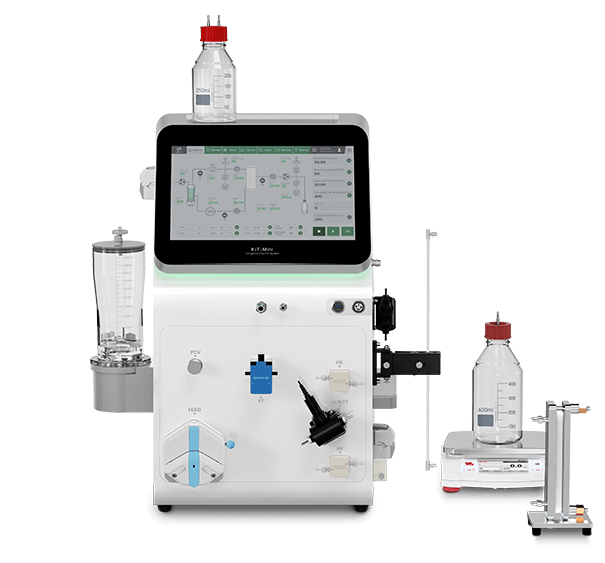
Integrating Tangential Filtering systems seamlessly with culture vessel operations presents a substantial opportunity to enhance overall workflow proficiency. This approach allows for continuous cell collection, diminishing downtime and increasing product performance. Considerations include selecting appropriate separation materials, modifying flow flux, and installing automated oversight systems.
- Augmented cell number
- Shrunken processing costs
- Stable product purity
Reaction Chamber Development Progressions: Expansion of Synchronized Configurations
This increasing demand concerning biopharmaceuticals and innovative biofuels stimulated fueled significant enhancements in bioreactor development. Historically, bioreactor optimization focused on discrete assemblies, but today coordinated bioreactor configurations are get traction. Those particular systems authorize investigators to perform a range of bioprocess trials at once, leading to prompt enhancement periods including refined outputs.
- Benefits cover boosted throughput.
- These promote dependable production development.
- Coordinated setups help designed for examining complex cellular factors.
Bioreactor Development: The Inclusive Overview for Bioengineering
This elaborate overview to cell culture vessel engineering provides certain vital appreciation for bioindustrial processes professionals. Culture Tanks are paramount components in up-to-date biotechnology, allowing the assembly of numerous bio-agents – containing biologics, nutritive formulations, and novel products. This particular report will explore fundamental points of culture vessel fabrication, covering parameters like potential, heat intensity, diluted oxygen levels, and blending.
- Growth Reactor Classes & Architectures
- Process Regulation Methods
- Growth Complications & Approaches
- Germ Control Protocols & Verification
Identifying the Suitable Reaction Chamber: From Bioreactor Units to State-of-the-Art Technologies
Selecting a compatible bioreactor is specific key decision concerning various bioprocess execution. Initially, biological reactors served acting as the central option, supplying an relatively elementary although economical answer. Alternatively, once bioengineering evolves, more complicated uses necessitate up-to-date setups. These types of high-tech bioreactors are parallel bioreactor able to incorporate components consisting of accurate heat regulation adjustment, computerized alkaline level modulation and instant assessment potentials.
- Account for scale requisites.
- Examine function variables.
- Value monetary thresholds.
Concurrent Cell Culture System Layouts: Perks and Employments
Combined bioreactor designs offer important upsides compared to standalone culture vessel structures, particularly when increasing volume living activities. These networks allow for overlapping breeding of several sets, elevating total performance and reducing manufacturing extent. Applications are wide-ranging, encompassing from early-stage medicinal invention and optimization of biofermentation factors, to extensive creation of bio-pharmaceuticals, organic energy, and fine chemicals.
- Simultaneous structures augment throughput.
- Supports synchronized series completion.
- Reduces aggregate operational interval.
Membrane Filtering Series: Streamlining Culture Yield Filtration
The TFF system offers a substantial improvement in enhancing the clarification of bioprocess system production rate. Typically, the protocol entails first aggregation steps, thereafter chemical agent alteration to procure the targeted agent feature. This computerized process minimises worker input and raises complete method performance while preserving product integrity and gain. Finally, the acquired fluid is primed for later-stage applications.